Ozark house washing: why river-fog and old brick need soft wash, not pressure
Ozark house washing is not a pressure-wash job. It is a soft-wash job, and the difference matters because Ozark sits in a river fog corridor that keeps siding damp longer than Springfield proper. The Finley River runs through the middle of town, and the bottomland on the low side of a street stays wet overnight. That moisture is the single biggest reason a north-facing wall in Ozark greens up faster than the same block north in Rountree or University Heights. Mildew does not grow on dry surfaces, and when the wall that faces the river bottoms is damp until noon, the organism has time to establish at the root rather than just dusting the surface. We carry the cleaning solution onto the wall at a garden-hose pressure, let it kill the growth at the root, and rinse clean without forcing water behind a lap seam. Around the historic square that means a gentle hand on aged brick and soft mortar; along the US-65 corridor it means lifting the chalky builder film off new vinyl before it dulls the finish.
The Finley River fog cycle and why it greens siding faster
Walk a block that runs parallel to the Finley and compare it to one a few blocks away from the river. You will see the difference: the wall on the low side of the street carries a different grade of green biology. That is because humidity settles in the bottomland overnight and keeps siding on the north and west sides wet long enough for the spore to find a foothold. The spore lands, the moisture keeps it hydrated through the morning, and by afternoon it has already established. This is why Ozark contractors talk about "river siding" the way Springfield contractors talk about "shady north wall" conditions - it is a distinct microclimate issue. Our method is chemistry first: we apply a detergent that kills the mildew at the root, let it dwell so the organism collapses, then rinse from the ground with enough pressure to carry the dead material away without driving water behind a seam.
Why the historic square brick needs gentle treatment
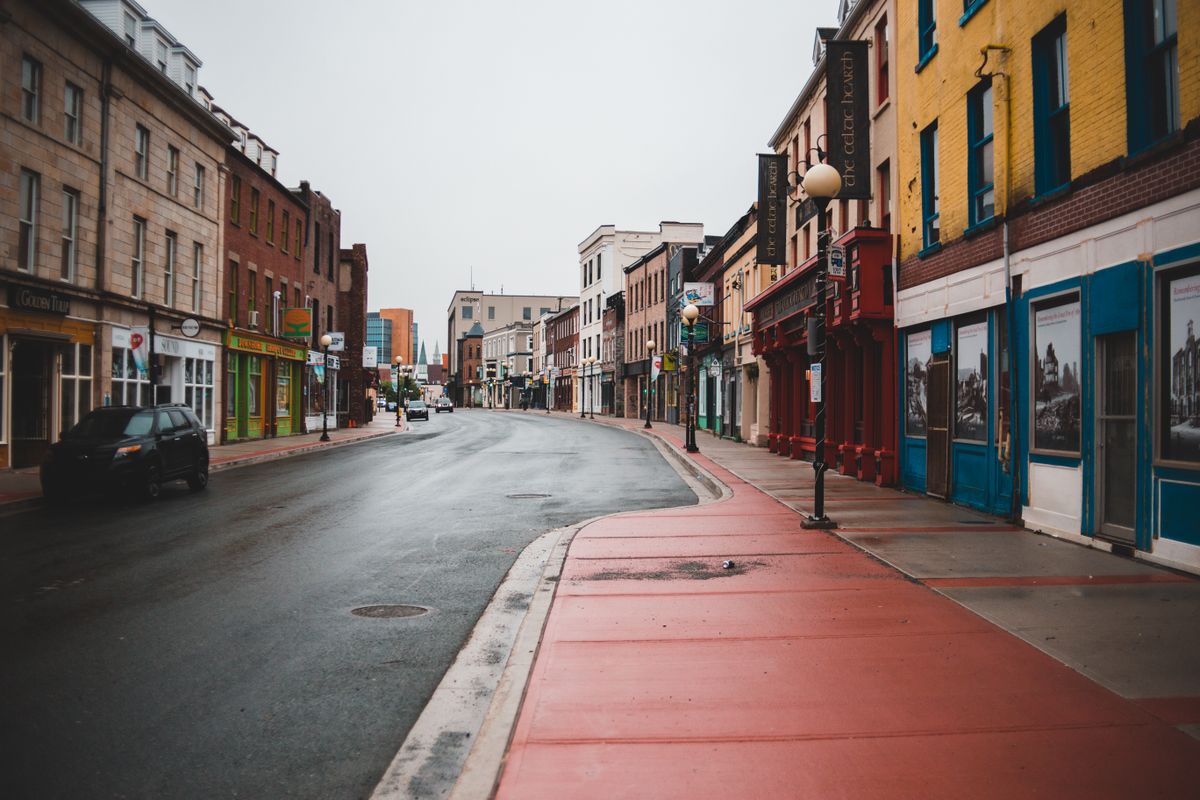
The brickwork around the Ozark courthouse square is old stock - laid in the 1920s and 1930s, with soft mortar that has eroded thin over a century of freeze-thaw cycles. A high-pressure blast will lift that soft mortar like chalk, and once it is gone the brick is more porous and holds water, which in a hard freeze works like a jackhammer against itself. Our approach to these old brick facades is a low-pressure soft wash: we apply a cleaning chemistry that draws the black biological streaking off the surface, letting the dwell time do the work so no high-pressure jet ever contacts the mortar joint. That restraint is what preserves the painted wood trim and the metal awnings that define the square's historic streetscape - and it is the reason the restored 1926 brick buildings downtown are still holding their finish while the buildings next door that took a high-pressure wash show cracked mortar and flaking brick.
Brick mortar preservation: the #1 priority in Ozark
A full century of building in Ozark means the mortar between bricks is often soft as putty. Modern Type S mortar and original lime-based mortar both erode under high pressure, and the difference is visible to anyone walking past a building that was pressure-washed versus one that was soft-washed. The damage is not cosmetic - once mortar is stripped, water gets behind the brick faster, and in our freeze-thaw climate that means spalling, efflorescence, and finally the need for costly tuckpointing every 10-15 years instead of every 50-100. We protect this investment by working below the mortar threshold - the solution goes on, dwell time does the work, and a low-pressure rinse lifts the growth without a single blast to the joint faces. This is why historic facade restorers in Ozark recommend soft-wash over pressure even when the budget allows pressure - they have seen the alternative.
The US-65 corridor: new vinyl with builder's film
Along the US-65 commercial strip the housing stock is newer - vinyl and fiber-cement laid in the 2010s and 2020s. That newer material carries its own problem: a chalky builder's film that sits on the surface from construction overspray, drywall dust, and the first season's pollen. The film bonds early because Ozark humidity finds its way into every cavity and corner, and it dulls the factory finish on vinyl panels. When that film sits under the oak pollen that drops each spring, the two layers look like dirt, but they are not. The film does not respond to a garden hose; it needs a chemistry that can break the bond. Along this corridor we use a degreaser-grade solution that lifts the construction residue first, then follows with the soft-wash mildew treatment, because the surface you are cleaning is paying for two different problems layered one on top of the other.
Understanding vinyl lifecycle differences
First-generation vinyl from the 1990s and early 2000s was thicker-gauge and often had a protective film. Newer vinyl, especially on homes built after 2015, is thinner in the field and relies on a factory-applied paint layer that can be etched by concentrated acids or abrasive pressure. We see this in two ways: the 1990s vinyl on the older residential lots responds well to a standard soft-wash, while the 2020s production on the subdivisions near the highway needs a pH-neutral solution and lower pressure to avoid dulling the finish. This evolution is why we carry multiple chemistries on every truck - matching the solution to the vinyl generation is the difference between a bright result and a permanently dulled surface that will never be as clean again.
The impact of Finley River silt on basement walls
Southwest Missouri sits on the Springfield Plateau, and the Finley River cuts through it with a corridor of finer, flatter silt that holds water even longer than the surrounding soil. Basement and crawlspace walls on the low side of town can see efflorescence bloom up from the ground in weeks after a heavy rain, and that same moisture climbs the foundation wall and adds to the mildew problem. Before we wash the siding we will do a foundation damp-proofing pass if you have efflorescence on the lower 3 feet, because a house that goes intowinter clean starts clean in spring. This foundation treatment is included on larger jobs and priced separately on focused wall washes - you are welcome to have just the foundation cleaned, or the whole envelope, and we will scope it honestly.
Ozark hard water leaves its own film
Christian County well water runs hard and high in iron in many parts of Ozark, and when sprinkler water dries on brick or siding it leaves a mineral film. That film reads like a stain but is actually dissolved limestone and iron oxide left behind when the water evaporates. It will not lift with any pressure - the mineral is sitting on top of the surface, not worked in - and it actually makes the next mildew problem worse by feeding a food source that the iron helps biology grow on. Where this film is heavy it goes orange and looks like rust bleeding out of the siding, which is why homeowners call thinking their brick is flaking. It is not flaking; it is mineral coating, and it is why we always pre-treat the lower course of brick and the first foot of siding with a mineral-disolving cleaner before the main soft-wash pass.
Why iron film requires chemistry, not pressure
Mineral film from iron-rich groundwater carries the same chemistry as rust stains. It is an oxide layer bonded to the surface by evaporation, not pressure, so no amount of water force will remove it. It requires an acid-based cleaner that can dissolve the iron without etching the substrate. We use food-grade phosphoric acid formulations because they kill two birds with one stone: they remove the stain and they also act as a mildewcide on any biological growth living in the film. This dual action is why the lower portion of a brick wall in Ozark can go from orange-streaked to white-washed in a single pass, and why homeowners see their drainage stains disappear.
When to wash in Ozark: the river-bottom timing
Ozark sits lower and wetter than Springfield proper, and the Finley bottomland holds humidity longer after a storm has moved off the plateau. The practical window for a house wash here is late spring through early fall, when the rain cycle is consistent but the oak and cedar pollen has finished its first drop. Early pollen is too sticky - it oils the surface you just cleaned and makes the result look dirty within days. Wait for the major pollen drop to clear, then wash before the heavy summer humidity builds a second layer of growth on walls that were just cleaned. A house wash in Ozark in late May will look cleaner coming out of June than a house washed in April, because you are starting with fresh siding rather than re-cleaning pollen that was still on the wall from the last visit.
Pollen, mildew, and the seasonal layering problem
In Ozark we do not just wash dirt off a wall. We wash:
- Oak and cedar pollen that settled all winter at the bottom and in the corners
- Moss and mildew that grew on the shaded north side through the winter months
- Rust film from hard water that built up during the previous summer
- Construction film on newer vinyl that never fully washed off after the first rain
Each of these layers requires a different chemistry and dwell time, which is why a rushed wash that skips any step leaves the wall looking cleaner a week later when the skipped layer begins to grow or resettle. We do not rush because we have seen what is left behind when a wall is only partly clean, and we do not leave a job until the biological layer is dead, the mineral layer is removed, and the construction layer is lifted.
Multi-surface coordination on an Ozark lot
A house wash in Ozark is rarely just siding. The same humid air that greens the brick also feeds mildew on the roof that faces the river, drips into the gutter faces that collect the tannin from oak litter, and lays mineral rings on the concrete driveway where sprinkler overspray lands. When we are already staged on the property with solution and rinse water, adding a roof soft-wash for the north slope, a gutter-face clean, and a concrete wash for the driveway comes in well under the cost of booking each one on its own trip across the bottomland. Because we are already managing the runoff from each surface, the house wash, roof wash, and concrete clean all share the same pre-wet plantings and the same diluted rinse, which is another cost saver that you do not see on a bid that prices each surface in isolation.
Roof washing coordination with Finley-side properties
The roof that faces the Finley gets a double dose of moisture - not only from rain, but from the constant humidity that settles in the bottomland. That roof will green up faster, and it will stay damp longer into the cleaning window. We soft-wash these roofs earlier in the season, often in early June rather than waiting for July, because the shingle granules start to show before they would in Springfield. The same chemistry that works on moss and Gloeocapsa on shingles is used, but we start the job earlier and we do the prep wetter because we know the roof is already saturated with moisture.
The Ozark-specific wash sequence
- Pre-wet the foundation plantings and the low wall sections. The bottomland moisture runs off the wall and onto tree root beds, and pre-soaking prevents the wash solution from going straight into the root zone and burning the tree.
- Apply the pre-treat for hard water film. Where iron or mineral coating is heavy on brick, apply the acidic pre-treat and let it dwell 5-10 minutes before the main soft-wash pass.
- Soft-wash the siding from base course to soffit. Apply the mildew-busting solution at a pressure the surface can take, starting at the top and working down so runoff does not streak wet solution being dripped onto areas already cleaned.
- Clean the brick accents with dedicated masonry chemistry. The biological streaking on brick needs a different pH balance than vinyl, and we carry both solutions so the right chemistry works on the right surface without cross-contamination.
- Rinse the gutters and the gutter faces. The dark vertical stripe of oxidation on aluminum gutters does not come off with the siding rinse; it is a different problem that needs its own treatment with a non-etching brightener.
- Wash the concrete driveway and the entry approach. The tire film from cars parked on clay-rich soil, the iron ring from well water, and the first-season moss on shaded slabs all lift together with the right concrete cleaner and a flat surface head, avoiding the wand-striation that a homeowner pressure washer leaves.
- Final sweep of the landscaping. Run the hose along the drip line of foundation plantings one more time to clear any remaining runoff before the crew leaves, so the azaleas and shrubbery do not show the tell-tale ring of wash chemical.
Understanding runoff management in the Ozark bottomland
The Finley River basin creates a unique drainage pattern that affects how we manage wash water. On higher ground, rain runs off quickly to the river. On bottomland lots, water saturates the soil and can pool in low spots. We bring our own water tanks and our own reclaim system so that we do not depend on municipal water access, and we place collection barrels at the lowest points of the property to capture any runoff that might otherwise pool in the grass and cause mud tracking back into the house. This level of control is what separates a professional Ozark wash from a homeowner pressure wash - we treat your drainage patterns as part of the job, not as something to be explained away.
Why Ozark needs a full envelope approach
A soft-wash on the siding that does not include the brick, gutter faces, and concrete will look dirty the moment someone walks from the house to their car. The eye notices the contrast: clean vinyl next to a black-streaked gutter, bright siding next to an iron-crusted driveway, fresh brick next to a mildewed staircase. Ozark's microclimate creates these contrasts intentionally - biology follows water, and water follows gravity. The bottomland keeps walls damp, walls shed rain onto foundations, foundations shed runoff onto concrete, and concrete sheds mineral film up onto the brick near the eaves. We clean the whole envelope as one system because the surfaces are interconnected, and a partial cleaning defeats the purpose of a full house wash.
Fall timing for the best long-term results
While late spring is excellent for a first wash of the season, many Ozark homeowners find their rhythm with a fall wash - late September through October - after the summer growth has established and before the winter moisture arrives. A fall wash in Ozark has three goals:
- Clear the accumulated growth so the house does not go into winter with biological load sitting on the surface
- Remove the lime deposits that have built up through the summer on the lower walls
- Start fresh for the holidays and the new year with a showroom-clean exterior
This timing works with the Ozark weather pattern - cool enough for solution to dwell without drying too fast, but still warm enough for the chemistry to work effectively.
Springfield metro coverage: where Ozark pages fit in the network
If your search is for pressure washing near me across the wider Springfield metro rather than Ozark specifically, our main Springfield house washing page is the single hub for the whole area - Rountree to Nixa, Ozark to Republic - and carries the same soft-wash method, upfront pricing, and guarantee. This Ozark page stays focused on what is different about the river-corridor town: the Finley bottoms humidity cycle, the historic brick square, the Christian County well water iron film, and the US-65 corridor's builder-film problem on new vinyl. We keep the river-side stock separate from the plateau-side stock, which is why this page covers the Finley fog, the old-square brick, and the hard-water film rather than repeating the metro-wide treatment.
Service Page Details - What's Included
- Siding on every elevation. Vinyl, fiber-cement, brick veneer, and LP SmartSide from the foundation line to the soffit, cleaned with soft-wash chemistry matched to the material.
- Brick, stone, and accent walls. The biological streaking around the courthouse square and the mineral film from hard water, cleared with masonry-safe cleaners at low pressure.
- Trim, fascia, and soffit undersides. The pollen and dust that collect in the shaded recesses under eaves, cleaned with a careful hand so the soft trim is not scored.
- Gutter faces and downspouts. The oxidation tiger-stripe that lives on the outside of aluminum gutters, brightened with a non-etching treatment.
- Concrete driveway and walkways. The tire film, iron ring, and shaded mildew lifted from Ozark concrete, cleaned with a surface head to avoid wand striping.
- Entry stairs and porch ceiling. The surfaces a visitor stands closest to, brought up to the same finish as the walls above them.
- Foundation damp-proofing. Where present, the lower 3 feet of wall treated for efflorescence and moisture management.
- Window tracks and sills. The grime that collects in the tracks and the mineral spotting on lower windows, cleaned without scratching the frame.
Why we quote before any water runs
We price an Ozark house wash from what we find on site, not from a per-square-foot guess that ignores the layered problems unique to river-bottom humidity and old brick stock. Tell us which walls face the Finley, the condition of the brick mortar around the square, whether the vinyl is first-generation or carrying the new construction film, and we will return with a single flat figure covering the whole job before we start. That figure is what appears on the invoice. If something turns up once we are on the wall that the first look did not catch, we will say so and agree the change with you rather than adding it to the bill at the end. Our guarantee is that the number we quote is the number we charge, and if you are not satisfied with the work we do not get paid.
Ozark's unique drainage challenges and how we handle them
Properties on the river side face a drainage challenge that plateaus properties do not: clean water runs off the clean walls and onto the already-muddy soil, which can then track back onto the freshly cleaned siding. We handle this by running our rinse water back toward the house (not away from it) and ensuring that the first rinse removes the chemical residue before the second rinse clears any remaining runoff. This technique is counter-intuitive to most homeowners who think "away from the house is better," but in the Ozark bottomland the ground takes longer to absorb water, and we have found through years of local experience that running rinse toward the house with clear collection keeps the lower wall the cleanest.
Ozark house washing is the same soft-wash method we use everywhere in the Springfield metro, just adapted to the specific problems this river town presents. For properties elsewhere in the Springfield metro that do not have a dedicated town page, the main Springfield house washing page covers the full area - it carries the metro-wide picture. This Ozark page keeps its attention on what is particular to the Finley corridor: humidity that greens walls first, brick that must not be stripped, and vinyl that still wears its builder film.